

 Proudly Canadian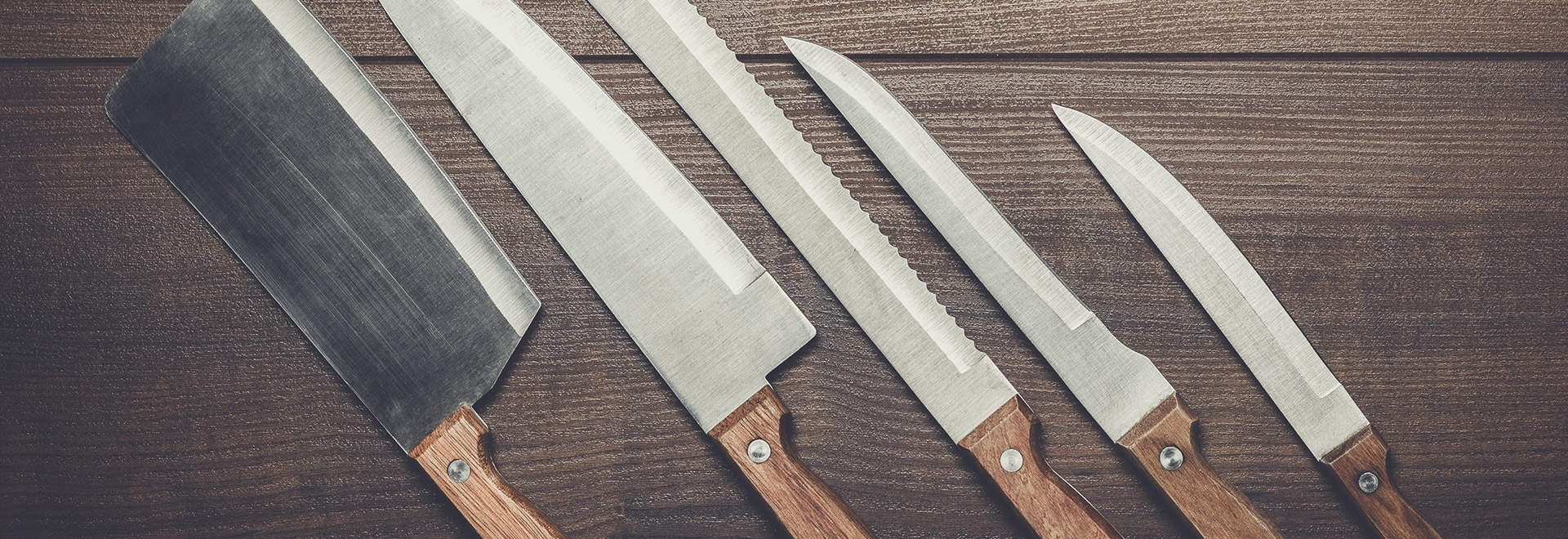
The Great Knife Dictionary
Admit it, you bought the set of 12 knives so you wouldn’t have to overthink it, right? In the end, you end up using just 2 or 3 knives from the set because you have no idea what the others are for?
Well, that time is over! Introducing The Great Knife Dictionary!
First, you should know that there are two main categories of knives: those for cleaning cuts of meat and all-purpose knives.
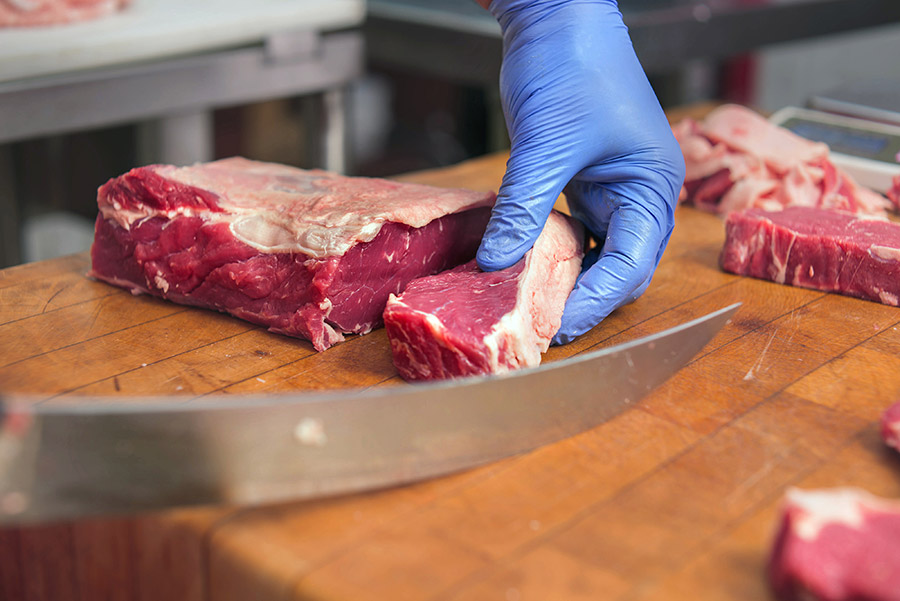
Cleaning Cuts of Meat
Scimitar: used in butcher shops for large cuts of meat that require precision and finesse. Its curved blade allows you to cut the meat in a single motion, avoiding shear marks.
Cleaver: used to cut through shells and animal carcasses, which are later used to make broths and stocks.
Boning Knife: there are two types of boning knives: flexible and rigid.
- Flexible: primarily used for delicate meats and fish or thin cuts. It allows you to navigate around joints in a piece of meat. On some models, you’ll find a small curve at the tip of the blade, which is used to cut tendons. Available in different lengths depending on the size of the meat or fish.
- Rigid: used for firm, fibrous meats. A shorter knife makes poultry deboning easier. Available in different sizes depending on the cut of meat.
Filleting Knife: a thin, uniform knife for cleaning fish. Its flexibility allows for skinning without waste, and its long blade makes maneuvering the knife easier.
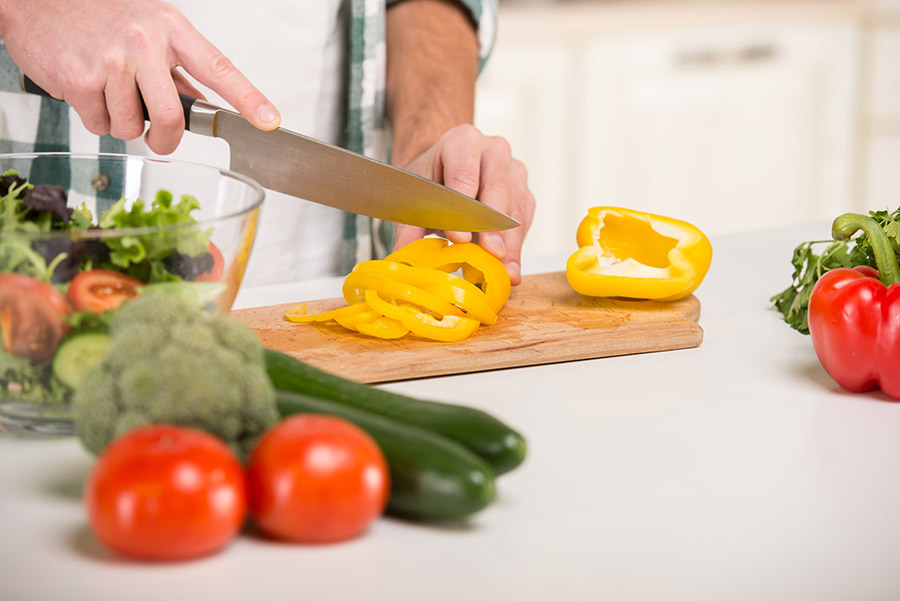
All-Purpose Knives
Serrated Knife: a bread or pastry knife. A knife with a pointed tip helps penetrate bread crusts, while a pointless one is handy for slicing. The serrated knife cuts through fresh, fragile products without crushing them.
Paring Knife: a small knife used for cleaning food with a firm grip and control in hand. Available in several versions: pointed blade, curved, serrated, short, or bird’s beak. It can be a tool for finishing and food carving.
All-Purpose Chef’s Knife: A universal knife. Allows for deboning, cleaning, and cutting vegetables. Available in different sizes. The 8" is the universal size, mostly used for home kitchens, while the 10" or 12" is useful for larger foods like watermelon.
Santoku/Asian Knife: for cutting, slicing, and chopping, especially fruits and vegetables. Its rounded tip is not designed for cleaning meats or fish. Available with or without dimples. Dimples reduce adhesion between food and the blade, lowering the risk of cuts when trying to remove stuck food from the blade.
Slicer (non-serrated): for thinly slicing fish or meat, such as bacon or smoked salmon. Available with or without dimples.
Recommendation
Our wide range of Victorinox knives is a reliable choice!