

 Proudly Canadian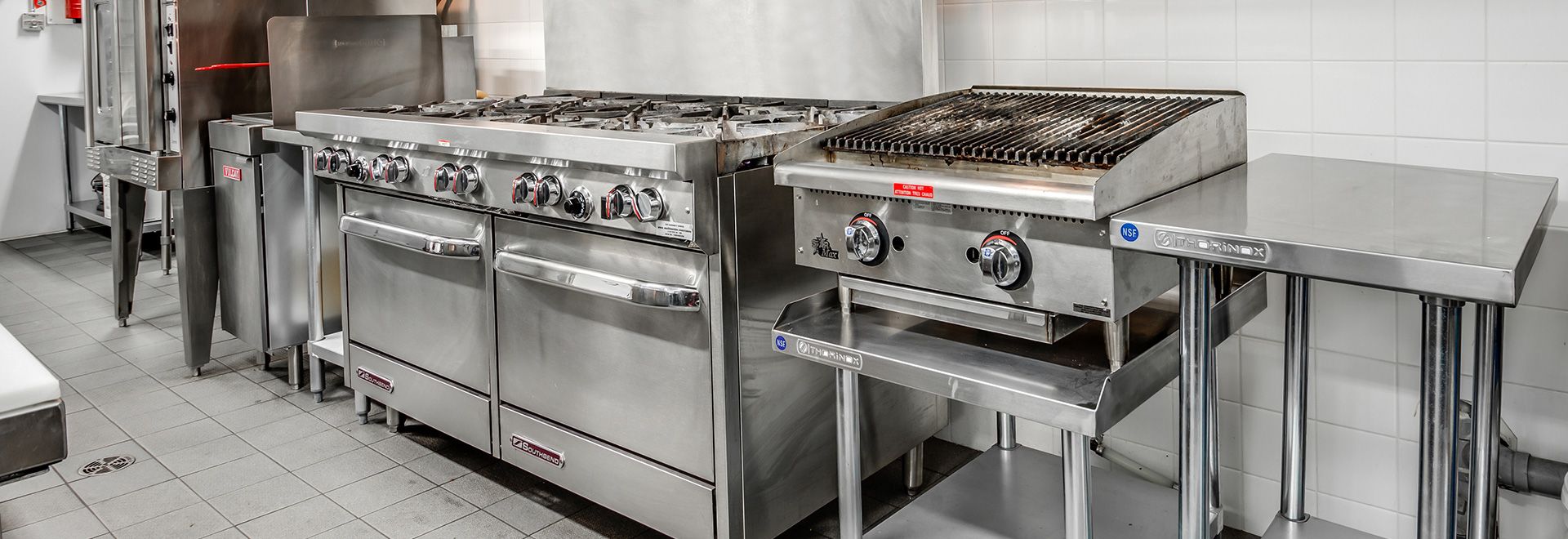
Commercial Gas and Electric Ranges
There are many types of cooking appliances specifically designed for commercial kitchens. The most popular among them? We're ready to bet it's the range! Although there's a variety of multi-functional appliances, the range is one that combines at least two distinct appliances, or more in some models. We've called upon Jean, a foodservice consultant, to provide information that could be useful during the process of acquiring a commercial range.
Distinguishing Feature #1: Power Source
 Électricité
Electricity
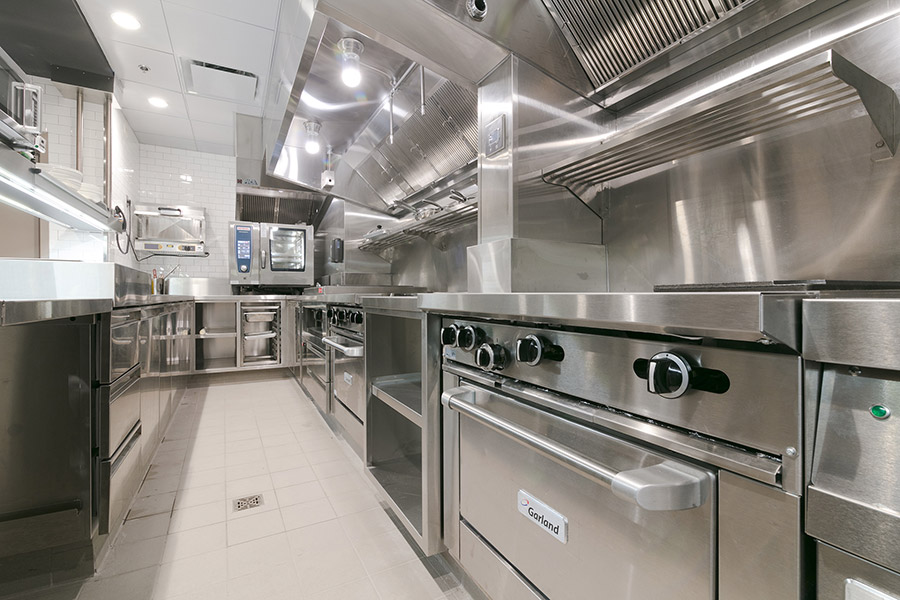
Electric ranges are equipped with heating elements on the surface, which can be traditional coils or flat, smooth disks. Jean states it's better to opt for a range with heating elements hidden under flat disks, which are more robust and sealed than coils. On these disks, heat is also better conducted. The base of a pan or pot rests entirely on a disk, ensuring efficient heating of both the cookware and its contents.
Natural Gas or Propane
Ranges powered by natural gas or propane are preferred by many chefs because they are reputed to be more efficient. The heat from these appliances quickly heats up the cooking vessels on the burners, allowing food to be cooked in no time. Some manufacturers produce models where the rear burners are elevated by a few inches, ensuring better access to them.
Distinguishing Feature #2: Configuration
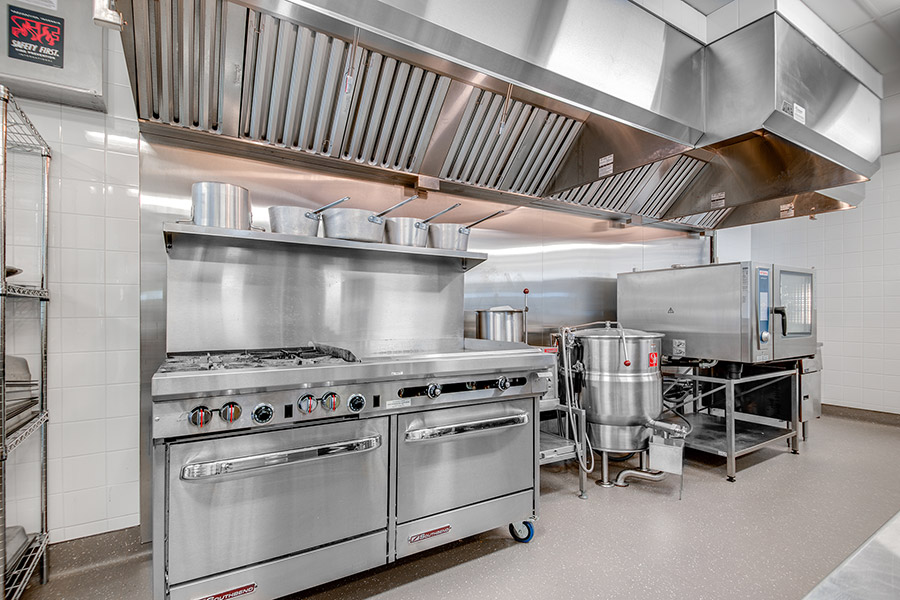
The range is one of the few commercial-grade appliances with two fundamentally different cooking zones: the cooktop on top and the oven below.
Cooktop
While many ranges are solely equipped with burners or heating elements, depending on whether it's gas or electric, some models differ. Certain manufacturers design ranges with one or two of the options listed in this table in addition to burners or heating elements:
| Electric Range | Options Available | Gas Range |
| X | Griddle | X |
| X | Boiling Plate | X |
| Broiler | X | |
| French Top | X |
The size of the griddle or broiler varies. The standard length is 24", while the width is traditionally 12", 24", 36", or 48". Anyone looking to get a multi-function range, not a conventional one, should start their search by identifying manufacturers who produce such appliances.
Oven
Most commercial ranges come with one or two independent standard ovens, the number depending on the size of the chosen appliance. Some models are designed without ovens, which are usually replaced by an open or closed base. Other ranges have neither ovens nor additional bases. Ranges equipped with a convection oven, which are quite expensive, are rare. This feature is typically one of the options offered to those purchasing such equipment. The ovens in commercial ranges are mostly equipped with one rack, or two for heavy-duty models, which are discussed in the next section. Lastly, the ovens in gas ranges generally have a single burner at the bottom, meaning they are not suitable for baking gratins.
Distinguishing Feature #3: Type of Use
Light Use
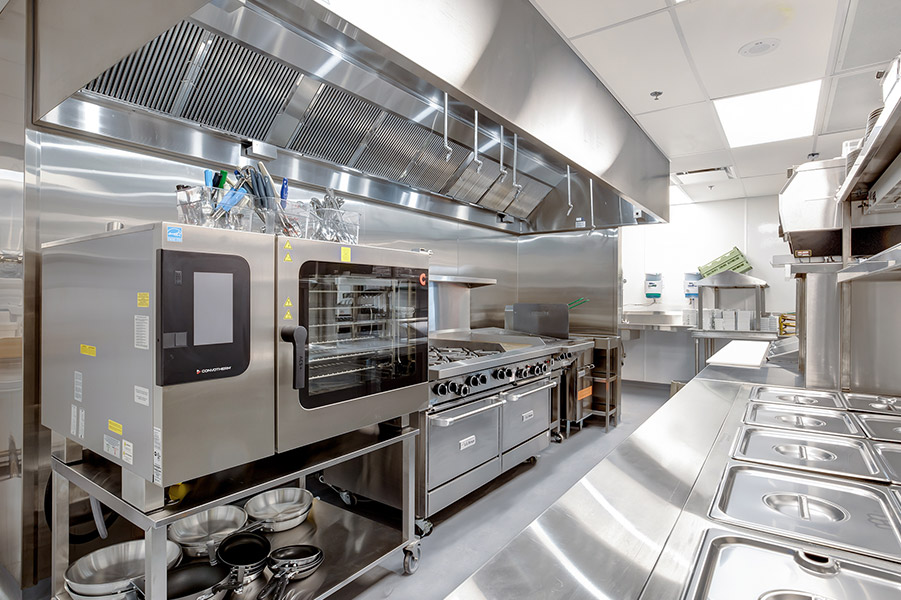
A few hundred meals per day can be prepared with a light-use range, making it an excellent appliance for restaurant kitchens, among others. The price of this type of range varies with the degree of quality. A high-quality appliance can cost twice as much as a standard one. For most light-use commercial ranges, the utility connections are located on one side, at the back.
Heavy Use
Heavy-use ranges are used for preparing several hundred meals daily, particularly in hotel kitchens, banquet halls, and various institutions. These appliances can cost more than twice as much as the best light-use ranges, but their lifespan is also twice as long. Utility connections are present on all sides except the back, unless requested otherwise from the manufacturer.
Performing a Thorough Review to Make an Informed Choice
The criterion of quality remains a top selection criterion for equipment intended for installation and use in a commercial kitchen. As you can see, each category of appliances has its own specifications and selection criteria that must be carefully considered. The power source of ranges, their configuration, and the type of use associated with them are all characteristics you should examine with your representative.