

 Proudly Canadian
Charcoal and Briquettes: A Portrait of These Fuels
Charcoal or Briquettes? Briquettes or Charcoal? Upon reading this article, you will notice that although these two fuels are both similar and different, they are equally effective.
This article does not serve as a comparison or a selection guide. Instead, it offers a variety of information about both fuels that could prove instructive. This potpourri of relevant information comes courtesy of Alexandre, a counselor at the Brossard branch, and Charles, a counselor at the Quebec branch.
Two Fuels, Two Combustion Curves
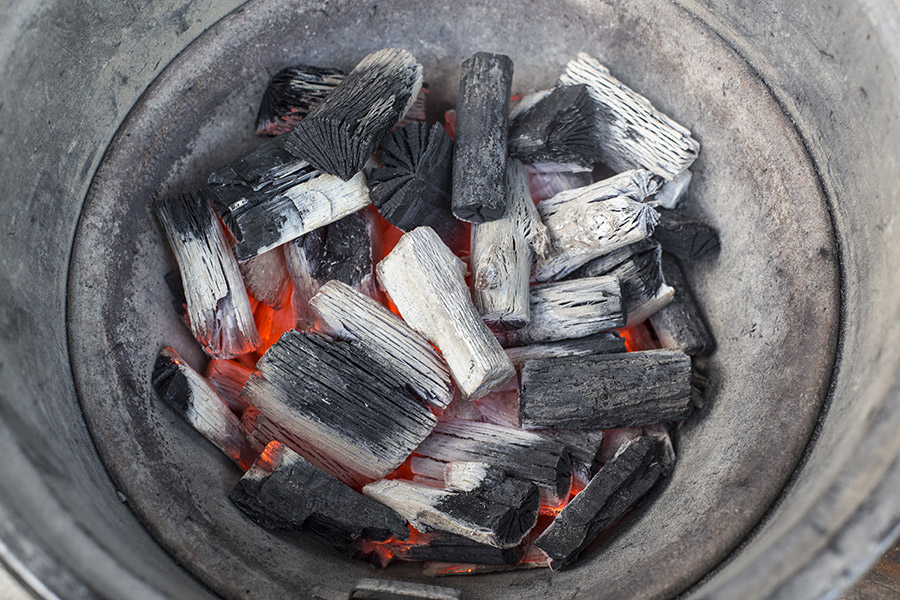
Briquettes are generally considered the ideal fuel for slow cooking, while charcoal is favored for regular cooking. The maximum temperature of the latter is nearly double that of the former, reaching 800°F versus 400°F. This significant difference is not the only distinction between these two fuels.
Once reached, the maximum temperature of briquettes is maintained throughout the cooking or smoking process or until only ashes remain. The temperature of charcoal, on the other hand, fluctuates; it increases rapidly once lit and then gradually decreases.
Wood Species and Combustion: No Correlation
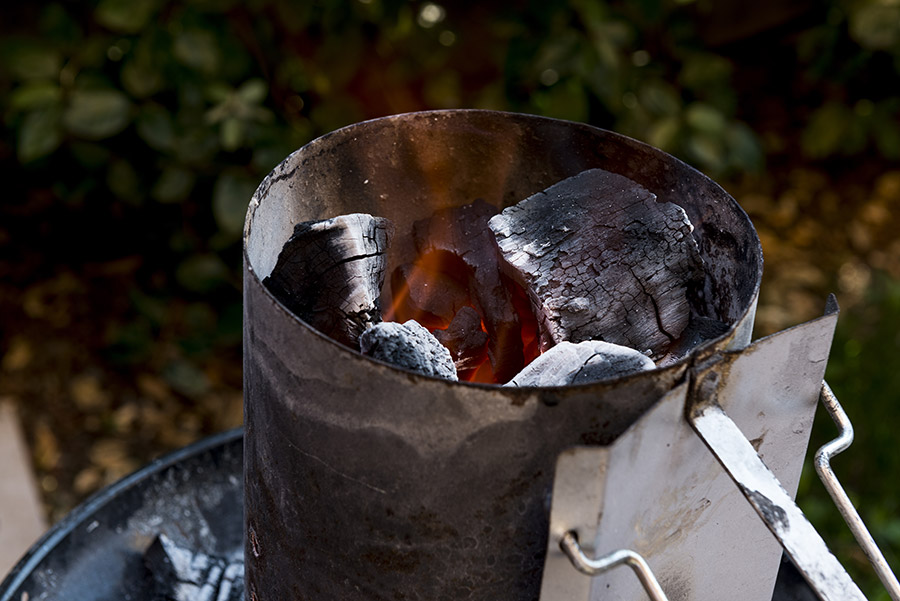
The larger the pieces of charcoal, the longer their combustion period. Therefore, charcoal might be preferred over briquettes for slow cooking if the piece size is appropriate. While the size of the charcoal pieces can be crucial, the same cannot be said for their composition, which does not significantly affect combustion efficiency.
Hence, one cannot judge the quality of charcoal in a bag based on the wood species used to make it. However, if you expect the charcoal to infuse foods with sublime flavors, you should evaluate it based on its composition. Opt for charcoal made from woods with medium to high intensity, like hickory, cherry, oak, or mesquite.
For or Against Chemicals and Additives?
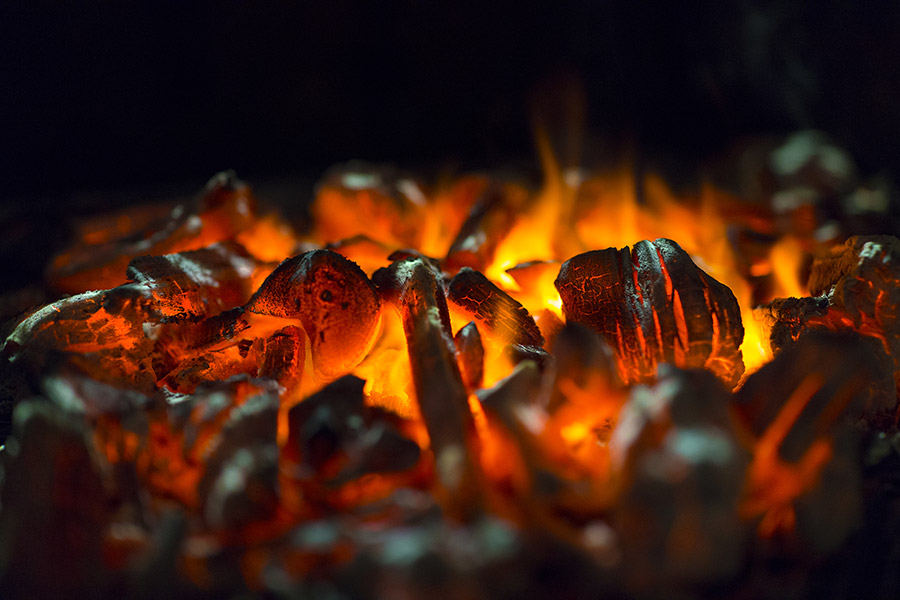
It is highly recommended to purchase charcoal or briquettes that contain no chemicals or additives added during production. Chemicals and additives can be potentially harmful to health, particularly for anyone near the smoke cloud produced by the heated fuel. We also tend to advise against buying charcoal or briquettes with these elements because they alter the natural flavor of the wood, regardless of the species.
Charcoal and briquettes are used primarily as fuel, but what sets them apart from other fuels like propane gas is the flavor they impart to food.
Charcoal Barbecues and Ashes
The faster charcoal pieces turn into ashes, the more frequently you'll need to remove the ashes from the barbecue. This is logical. However, the frequency of ash removal varies depending on the type of barbecue you own.
Even when the air vents are closed, combustion can continue after cooking, transforming the fuel into ashes. This is true for kettle-type barbecues, which have a thin, less airtight chamber, but not for ceramic barbecues, which have a thick, airtight chamber. This means that a bag of charcoal or briquettes will last longer for the owner of a ceramic "egg" than for someone with a kettle-type barbecue.
Tips and Rapid Facts
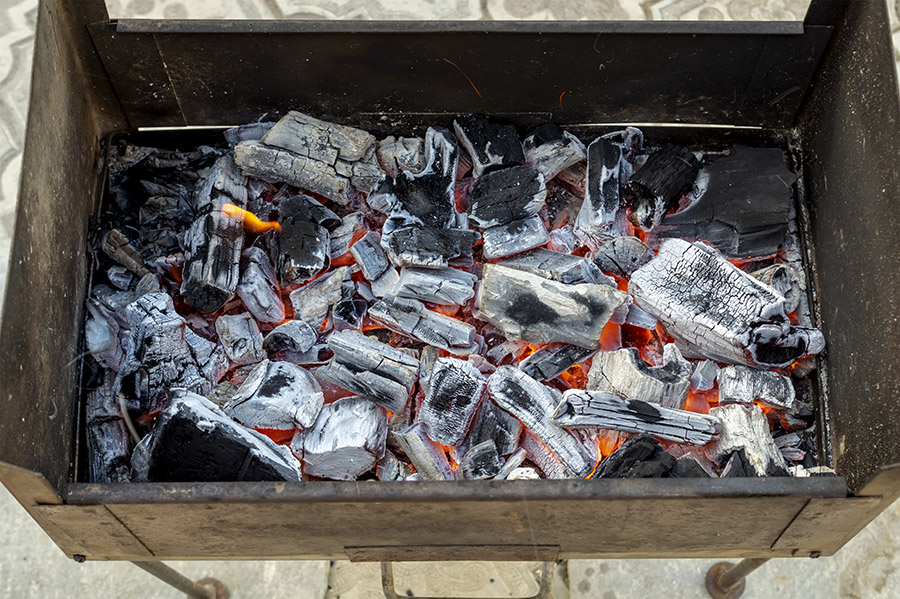
Charles, who uses charcoal for his home barbecue, shared several interesting pieces of information about charcoal and briquettes:
- It's not worth putting briquettes in a ceramic barbecue since combustion is very efficient in this type of appliance, and the fuel temperature is easily maintained.
- It's not recommended to use the snake method with irregularly sized charcoal pieces as this method works best with uniformly sized pieces.
- It's advisable to always have at least one spare bag of charcoal because the bottom of a bag often contains small pieces or crumbs, which are less effective for optimal combustion.
- Having a bag of large charcoal pieces and one of medium-sized pieces is good to mix some of the medium pieces with the large ones if they are hard to ignite.
Summary of Characteristics and Usage Criteria
What better way to conclude this article than with a table listing the most significant characteristics of charcoal and briquettes?
| Charcoal | Criteria | Briquettes |
| Very high temperature | Heating Degree | High temperature |
| Rapid decrease | Temperature Progression | Maintenance |
| Regular cooking | Recommended Cooking Type | Slow cooking |
| Low or medium | Ash Production Degree | High |
We wish you success in your next cooking or smoking sessions with your charcoal barbecue!